
- Personalized and Evidence - Based Neurological Care
- +91-9773763662
+91-9773763662
sjsneuro@yahoo.com
Parkinsons Disease and Movement
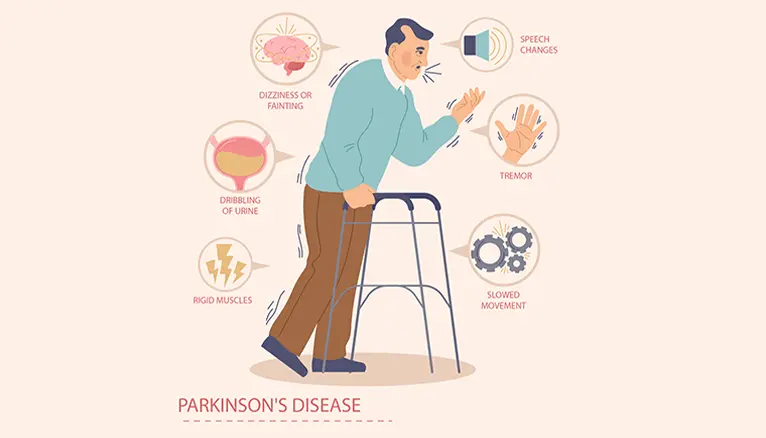
Parkinsons Disease Neurologist in Gurugram
Parkinsons Disease and Movement
Parkinson’s disease is a progressive neurological condition that primarily affects movement control. It occurs due to the gradual loss of dopamine-producing cells in the brain. Dopamine plays a vital role in coordinating smooth and purposeful movements.
Movement disorders include a group of neurological conditions that cause abnormal voluntary or involuntary movements. Parkinson’s disease is one of the most common movement disorders worldwide.
What Causes Parkinson’s Disease?
The exact cause of Parkinson’s disease remains unclear. However, several factors contribute to its development, including:

Degeneration of dopamine-producing neurons
Genetic susceptibility
Environmental toxin exposure
Aging-related brain changes
Oxidative stress and inflammation
Although Parkinson’s disease cannot be cured, early diagnosis significantly improves symptom control.
Key Symptoms of Parkinson’s Disease
Symptoms usually develop gradually and worsen over time. Common movement-related symptoms include:
Tremors at rest, especially in hands
Muscle rigidity and stiffness
Slowness of movement (bradykinesia)
Difficulty initiating movements
Shuffling or slow walking
Poor balance and frequent falls
Symptoms often begin on one side of the body before progressing.
Non-Motor Symptoms of Parkinson’s Disease
In addition to movement problems, Parkinson’s disease causes non-motor symptoms that affect daily life:
Fatigue and sleep disturbances
Depression and anxiety
Memory and concentration difficulties
Speech and swallowing problems
Constipation
Reduced sense of smell
Addressing non-motor symptoms is essential for comprehensive care.
Other Common Movement Disorders
Movement disorders vary based on their neurological origin.
Essential Tremor
Essential tremor causes rhythmic shaking, usually during movement or posture holding.
Dystonia
Dystonia leads to involuntary muscle contractions and abnormal postures.
Chorea
Chorea produces rapid, jerky, unpredictable movements.
Tics and Tourette Syndrome
These conditions cause repetitive, sudden movements or vocalizations.
Each disorder requires specific evaluation and treatment strategies.
Diagnosis of Parkinson’s Disease and Movement Disorders
Diagnosis is primarily clinical, supported by neurological examination. Doctors may recommend:
Detailed medical history and symptom assessment
Brain imaging studies such as MRI
Dopamine transporter imaging in selected cases
Response to dopaminergic medications
Early diagnosis allows timely symptom management.
Medical Treatment for Parkinson’s Disease
Medications
Medications remain the cornerstone of Parkinson’s treatment. Common options include:
Levodopa and carbidopa
Dopamine agonists
MAO-B inhibitors
COMT inhibitors
These drugs improve movement, reduce stiffness, and enhance daily functioning.
Advanced Treatment Options
For patients with advanced disease or medication-related complications, advanced therapies may be recommended:
Deep Brain Stimulation (DBS)
Continuous infusion therapies
Targeted lesioning procedures
These treatments significantly reduce motor fluctuations and tremors.
Rehabilitation and Movement Therapy
Rehabilitation plays a critical role in preserving mobility and independence. Programs include:
Physiotherapy for strength and balance
Occupational therapy for daily activities
Speech therapy for voice and swallowing
Gait training and posture correction
Regular exercise slows functional decline and improves quality of life.
Lifestyle Management for Better Movement Control
Lifestyle changes support medical treatment and improve outcomes:
Regular physical activity
Balanced nutrition
Adequate sleep
Stress management techniques
Fall-prevention strategies
Consistency enhances mobility and confidence.
Living with Parkinson’s Disease
Parkinson’s disease affects both patients and caregivers. Emotional support, education, and community resources play an essential role in long-term care. Early planning and multidisciplinary management empower patients to remain active and engaged.

🎓 MBBS(Internal Medicine), MD(Internal Medicine), DM(Neurology)
Senior Neurology Consultant at Marengo Asia Hospital, Gurugram
Our Services
- Migraine and Headache Disorder
- Stroke and Stroke Rehabilitation
- Cervical and Lumbar Spondylosis
- Backache and Spine Disease
- Epilepsy and Seizure Disorder
- Parkinsons Disease and Movement
- Dementia and Alzheimer Disease
- Nerve and Muscle Disorders
- Depression
- Multiple Sclerosis and Neuroimmunological Disorder
- Stress and Anxiety Disorders